Hidden Life: A Catholic Home Education Rooted in Faith Curiosity and Beauty
- Hidden Life

- 16 hours ago
- 5 min read
Hidden Life is a Catholic home education curriculum created to support families in the UK who want learning to be faithful, living, and real. It draws from rich educational traditions, including Classical education, Montessori, and Charlotte Mason, while keeping Christ at the centre of the home and the child’s formation.
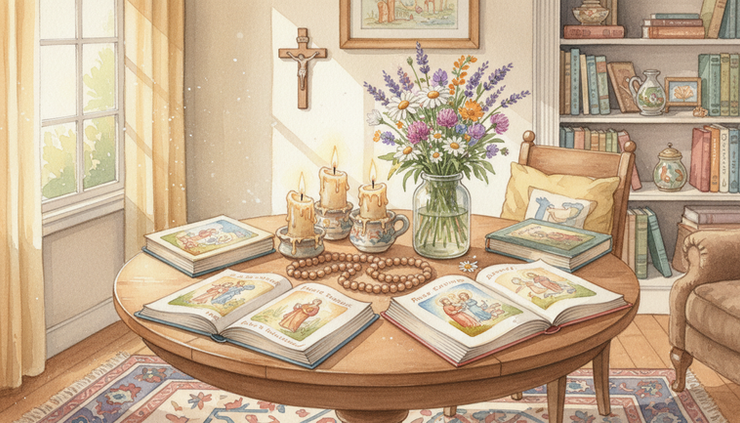
A Catholic education begins with the whole child
Children are not minds to be filled while the rest of their being waits outside the lesson. They are persons made in the image of God, with intellect, memory, imagination, will, affections, and a soul created for communion with Him!
Hidden Life seeks to educate minds, hearts, hands and souls together.
That means learning should help children:
discover truth with wonder
grow in virtue through daily practice
recognise beauty in creation, art, music, and story
build habits of attention, prayer, patience, and care
understand that faith belongs in every part of life
Hidden Life brings together trusted educational traditions
Many families feel drawn to different approaches, yet worry they must choose only one. Hidden Life honours the strengths of several great traditions and brings them into conversation within a Catholic vision of the child.
Classical education gives structure and truth
The Classical tradition treasures language, memory, logic, history, and the great works that have shaped civilisation. It helps children ask deep questions: What is true? What is good? What is beautiful?
In a Catholic home, Classical education becomes more than academic training. It becomes a path towards wisdom. Children learn that truth is not invented by each generation. It is received, loved, tested, and lived.
Classical learning also gives children a strong foundation. They meet rich stories, noble ideas, saints, Scripture, poetry, and thoughtful conversation. These shape their inner life over time.
Montessori respects the child’s growth
Montessori education brings a careful attention to the child’s development. It values order, purposeful work, independence, and hands-on learning. A prepared environment helps children move from curiosity to concentration.
At home, this can look simple and beautiful: child-sized tools, baskets of materials, a low shelf with well-chosen work, real tasks, not pretend ones, pouring water, polishing wood, arranging flowers, folding cloths, preparing a snack..the list goes on.
These activities build coordination and confidence, but they also form the will. A child learns to choose, to complete, to restore order, and to serve.
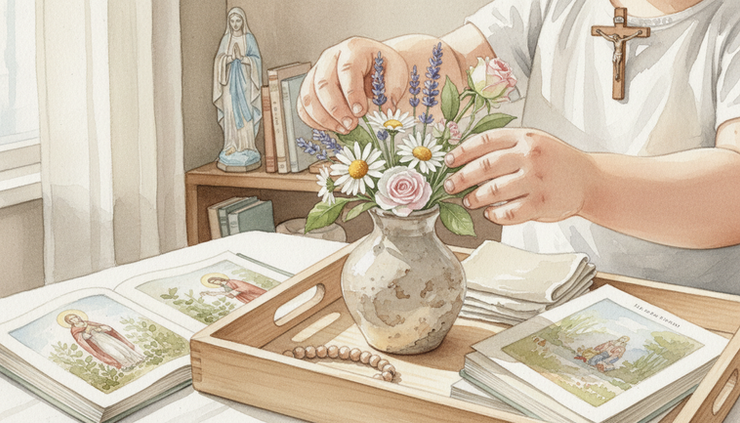
Charlotte Mason nurtures wonder and living ideas
Charlotte Mason’s approach brings warmth, beauty, and respect for the child as a person. It encourages living books, narration, nature study, habit formation, short lessons, and generous time outdoors.
This tradition reminds families that education is not dry information. It is relationship: with God, with people, with creation, with language, with history, and with the living ideas found in good books.
Children thrive when they are given beautiful things to love. A well-told story, a hymn, a bird’s nest, a painting, a psalm, a line of poetry, these small offerings can stay with a child for years.
Everyday life is full of lessons
Hidden Life values experiential learning because children learn deeply when they touch, observe, imitate, repeat, and wonder.
A home does not need to look like a schoolroom to be rich in learning. Much of education happens through ordinary family life:
baking bread and noticing yeast, heat, weight, and time
setting the table with care and learning service
tending herbs and watching growth through the seasons
counting change at the shop
reading aloud after lunch
singing a hymn while tidying
writing a thank-you note
observing frost, feathers, clouds, seeds, and insects
A child who kneads dough learns through the senses. A child who watches ants learns patience and observation. A child who helps care for a younger sibling learns love in action. A child who prays before beginning work learns that every task can be offered to God.

Nature opens the heart to praise
Nature exploration holds a special place in Hidden Life.
When children spend time outdoors, they begin to notice patterns, seasons, creatures, weather, growth, decay, silence, and surprise. They learn that the world is ordered and generous. They learn humility, because creation cannot be rushed or controlled.
Wonder is often the doorway to prayer.
Hidden Life encourages families to make space for this kind of attention. A few minutes outside each day can steady the mind and refresh the soul. Over time, children begin to see the created world as something to receive with reverence, not simply to use.
A nurturing home forms more than habits
The atmosphere of the home matters. Children absorb the tone of a place. They notice whether learning feels rushed or peaceful, whether books are treated as treasures, whether prayer is woven naturally into the day, whether beauty is present in small things.
A nurturing home does not need to be perfect. It does not need expensive materials or a flawless routine. It needs love, order, forgiveness, and a steady return to what matters.
Small choices can shape the home environment:
keep good books within reach
display sacred art and seasonal natural finds
choose simple materials that invite real work
light a candle for prayer or read-aloud time
protect quiet moments in the day
create routines that feel human, not heavy
let children see adults reading, praying, making, repairing, and serving
Beauty has a quiet power. A clean table, a vase of flowers, a hymn sung gently, a well-loved story, a carefully copied sentence, these help children feel that learning is worthy of care.
Faith gives the home its centre. Prayer before lessons, feast day traditions, Scripture, the lives of the saints, and the liturgical year all help children understand that their days belong to God.
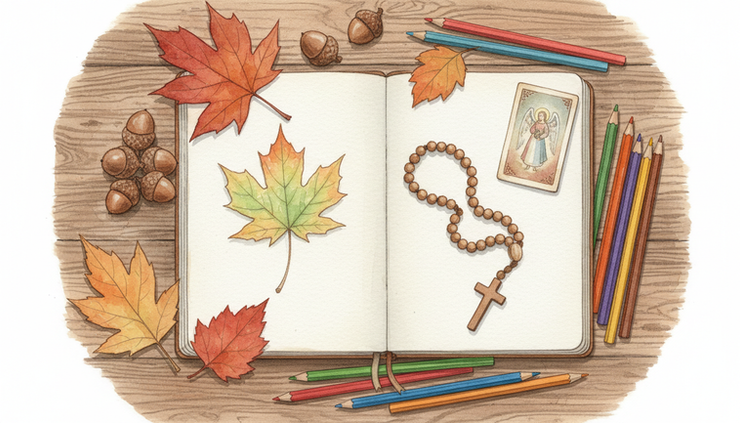
Hidden Life invites families into a slower and richer way
Hidden Life is not about recreating a classroom at home. It is about honouring the home as a place of formation.
It supports families who want an education rooted in Catholic faith, rich in ideas, alive with beauty, and close to real life. It draws from Classical, Montessori, and Charlotte Mason traditions because each offers gifts. Together, they help children think clearly, work carefully, observe closely, speak truthfully, and love what is good.
This journey will look different in every home. Some days will feel orderly and lovely. Other days will feel unfinished. Grace belongs in both!
The hidden life of the home is often quiet. It may not be seen by many. Yet it is there that children learn how to pray, how to wonder, how to serve, how to seek truth, and how to recognise beauty. That work is deeply worthwhile.
Comments